So here is why I bought some FB shares @ $149.80.
Strengths
Reach: Saying many people knows about FB is probably an understatement. According to FB, there are reportedly 2.27 billion monthly active users on Facebook as of September 30, 2018. Based on a world population of 7.53 billion people, it means about 30% of the world population uses Facebook. There are not that many companies that can claim to have 30% of the world population as users, many of them on a daily basis. Imagine the amount of data which FB is collecting from these 2.27 billion users on a daily basis! And what FB essentially sells is our data; to advertisers. So while it is free to use, we are essentially paying with our personal data, our likes, our comments and everything we do on FB.
 Diversification: I am not too sure about you, but I have heard a couple of times on the street or from friends and relatives, FB is passé already, now i am on Instagram! But did you know besides Facebook, FB also owns Whatapps (WA) and Instagram (IG), if you are not on FB, you are likely on Instagram and most likely you already use whatapps! So just how big are WA and IG?

WA: In Jan this year, a Techcrunch article shared that there are 1.5 billion WA users who send 60 billion messages daily.
IG: According to Techcrunch, as of June this year, IG has about 1 billion users. While FB do not report IG revenues separately, I am inclined to think it should be quite a sizable amount, considering the user base. While I have heard some people leaving FB for IG, no worries there if you are vested in FB! Besides, actually i do not think people really delete their FB account per se, it is just they use it less as compared to using IG. Going forward, IG will be launching IGTV, which essentially is IG version of Youtube.
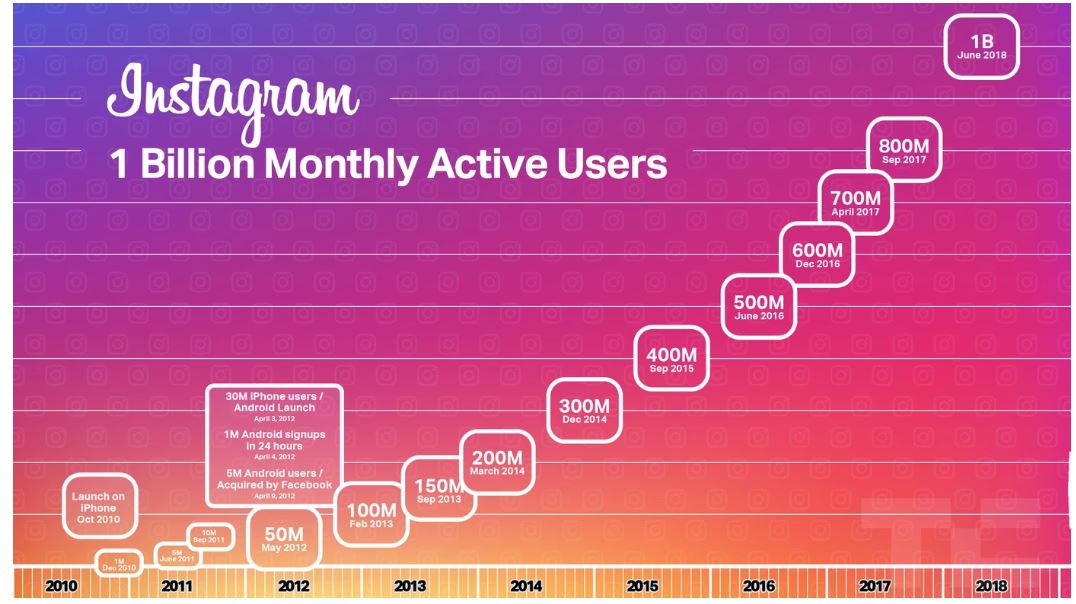 |
| Source |
Stickiness: I have to say the FB / IG / WA, are extremely sticky. You just need to travel on the public transport in Singapore to see that. With everyone glued to their phones during their morning / evening commute, you can see that at least 70% of people are on FB app. Even in office, you can see the prominent blue bar of FB on many laptop screens! It seems like when people are bored, people will just turn to FB to fill up these gaps. Some might turn to reading the news or a book, but it seems to me that MANY turn to FB / IG / WA for their daily source of entertainment, news, videos, and communication. Though what I see is only in Singapore, I believe it is pretty similar in many developed countries in Singapore.
In short, FB / IG / WA is very pervasive and very sticky, in Singapore at least, as well as many other countries, which is good for a company.
Weakness
Concentration risk: While FB, WA and IG provide diversification, they are all social media platform related after all. If something drastic happens to the online social media platform, FB would no doubt be affected. Though at this point in time, I am unable to think of something like that could happen in the foreseeable future.
One-off businesses: Advertisers are not sticky, they will bring their money to whichever medium is most effective. So there is no incentive for them to stay with FB related products if they find FB do not translate eyeballs to dollars. Advertising on FB is also relatively cheap compared to traditional kind of advertising so FB will need to continue to keep their customers base wide.
Competing needs / wants of users and advertisers: Having advertisements on their platform are the main form of revenue generation for FB / IG, but at the same time, users can get pissed off if there are too many such ads. You might have already experienced it (I have) where the ads just auto play in the middle of the video you are watching and you have no way of skipping it. Many a times, i simply scroll down to the next video once the ad starts, not watching the rest of the video thereafter. [Important point here i scroll down and do not switch off the app altogether, so i am still in the FB app, dammit FB is sticky!]
Reputation as a social media behemoth: The fact FB is the number one social media platform in itself could be seen as a weakness when it become a magnet for almost all social media related problems / criticisms e.g. privacy leak, Mark traveling to Washington to answer questions on FB data mishandling, US election / Russia influence probe. All of which, could distract FB from their main business.
Opportunities
Further business diversification: With the money and customer based, FB is able to diversify outside its core social media and online advertising business e.g. payments perhaps within it's Messenger / WA, similar to Wechat in China where this one app can do so much more than just sending message.
Any other areas they wish to venture into: Ok, i am a little hard pressed to think of other areas, but with the money and user numbers, FB does have a very good starting point to launch / venture into new areas complementary to FB.
Threats
Substitutes: FB is not the first social networking site created and it will not be the last. There was Myspace and Friendster before FB but FB have emerged top (at least for now), but going forward, no one knows which other new platform might pop up. But do not rule out FB buying them outright, like in the case of IG. Though anti-competition regulations might stop this from happening in future.
Privacy and new regulations: Cambridge Analytica Scandal, new regulations being introduced on data privacy, e.g. The EU General Data Protection Regulation (GDPR). The GDPR can implement fines of up to 4% of a company’s annual revenue for data violation!
Cybersecurity: Holding so much data will make FB a prime target for cyber security attacks. If there was ever a successful attack, confidence in FB would drop tremendously and it reputation will definitely be affected adversely. [that said, this is also the same for all social media companies.]
Market saturation: Getting more users = more data to sell to advertisers. But market saturation will kick in (or already has) so FB will need to find new ways to increase membership e.g. digital inclusion initiatives that would bring the unconnected online. [likewise for all other social media companies to be as well]
Numbers, numbers, numbers (from Reuters)
And so that is why I have invested in FB. 😉
Phew, doing up such a post took much longer than I thought it will need. But I am happy to have finally done up my first investment journal.
I hope you find the above analysis useful and do let me know if you have any alternative views. Happy to discuss!
Bye for now!
Frugal Singa
Weakness
Concentration risk: While FB, WA and IG provide diversification, they are all social media platform related after all. If something drastic happens to the online social media platform, FB would no doubt be affected. Though at this point in time, I am unable to think of something like that could happen in the foreseeable future.
One-off businesses: Advertisers are not sticky, they will bring their money to whichever medium is most effective. So there is no incentive for them to stay with FB related products if they find FB do not translate eyeballs to dollars. Advertising on FB is also relatively cheap compared to traditional kind of advertising so FB will need to continue to keep their customers base wide.
Competing needs / wants of users and advertisers: Having advertisements on their platform are the main form of revenue generation for FB / IG, but at the same time, users can get pissed off if there are too many such ads. You might have already experienced it (I have) where the ads just auto play in the middle of the video you are watching and you have no way of skipping it. Many a times, i simply scroll down to the next video once the ad starts, not watching the rest of the video thereafter. [Important point here i scroll down and do not switch off the app altogether, so i am still in the FB app, dammit FB is sticky!]
Reputation as a social media behemoth: The fact FB is the number one social media platform in itself could be seen as a weakness when it become a magnet for almost all social media related problems / criticisms e.g. privacy leak, Mark traveling to Washington to answer questions on FB data mishandling, US election / Russia influence probe. All of which, could distract FB from their main business.
Opportunities
Further business diversification: With the money and customer based, FB is able to diversify outside its core social media and online advertising business e.g. payments perhaps within it's Messenger / WA, similar to Wechat in China where this one app can do so much more than just sending message.
Any other areas they wish to venture into: Ok, i am a little hard pressed to think of other areas, but with the money and user numbers, FB does have a very good starting point to launch / venture into new areas complementary to FB.
Threats
Substitutes: FB is not the first social networking site created and it will not be the last. There was Myspace and Friendster before FB but FB have emerged top (at least for now), but going forward, no one knows which other new platform might pop up. But do not rule out FB buying them outright, like in the case of IG. Though anti-competition regulations might stop this from happening in future.
Privacy and new regulations: Cambridge Analytica Scandal, new regulations being introduced on data privacy, e.g. The EU General Data Protection Regulation (GDPR). The GDPR can implement fines of up to 4% of a company’s annual revenue for data violation!
Cybersecurity: Holding so much data will make FB a prime target for cyber security attacks. If there was ever a successful attack, confidence in FB would drop tremendously and it reputation will definitely be affected adversely. [that said, this is also the same for all social media companies.]
Market saturation: Getting more users = more data to sell to advertisers. But market saturation will kick in (or already has) so FB will need to find new ways to increase membership e.g. digital inclusion initiatives that would bring the unconnected online. [likewise for all other social media companies to be as well]
Numbers, numbers, numbers (from Reuters)
 |
| FB:NASDAQ |
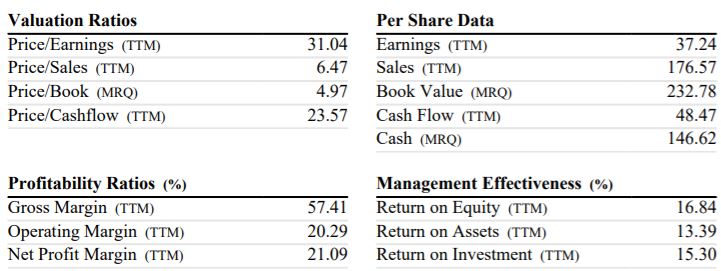 |
| GOOG:NASDAQ [quite attractive numbers as well, but net profit margin is lower and management effectiveness not as high as FB] |
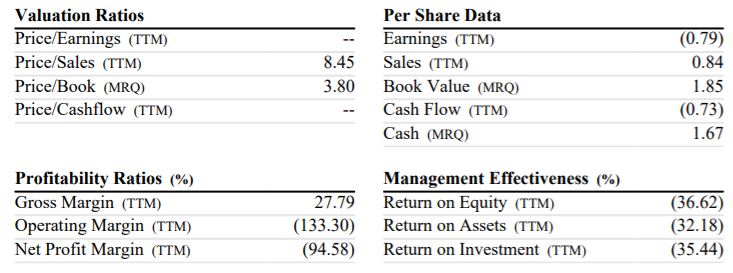 |
| SNAP:NYSE [not quite a worthy comparison to FB, not yet anyway] |
 |
| TWTR:NYSE [President Trump fave means of comms. I was quite surprised at Twitter's number actually cos they are quite attractive in itself per se. But maybe i am not a twitter user/ fan, i just feel 240 characters are no match for FB's suite of offerings.] |
Phew, doing up such a post took much longer than I thought it will need. But I am happy to have finally done up my first investment journal.
I hope you find the above analysis useful and do let me know if you have any alternative views. Happy to discuss!
Bye for now!
Frugal Singa


